What is electronics prototyping kit?
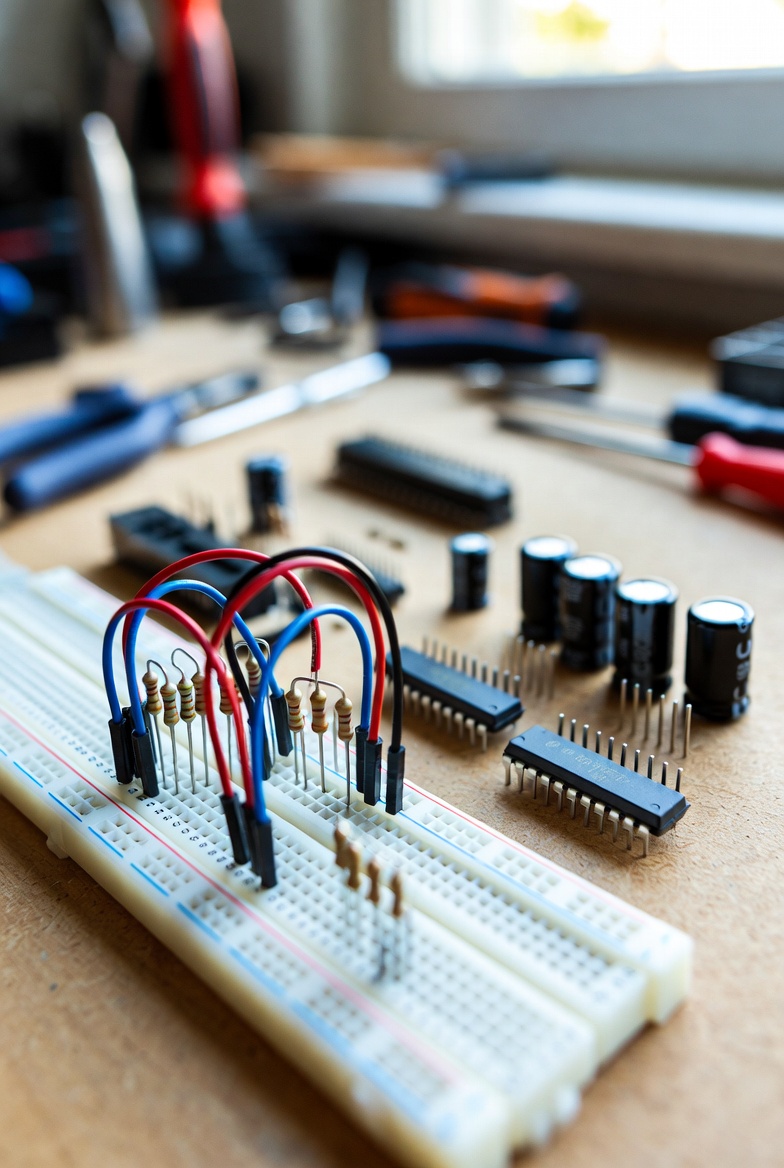
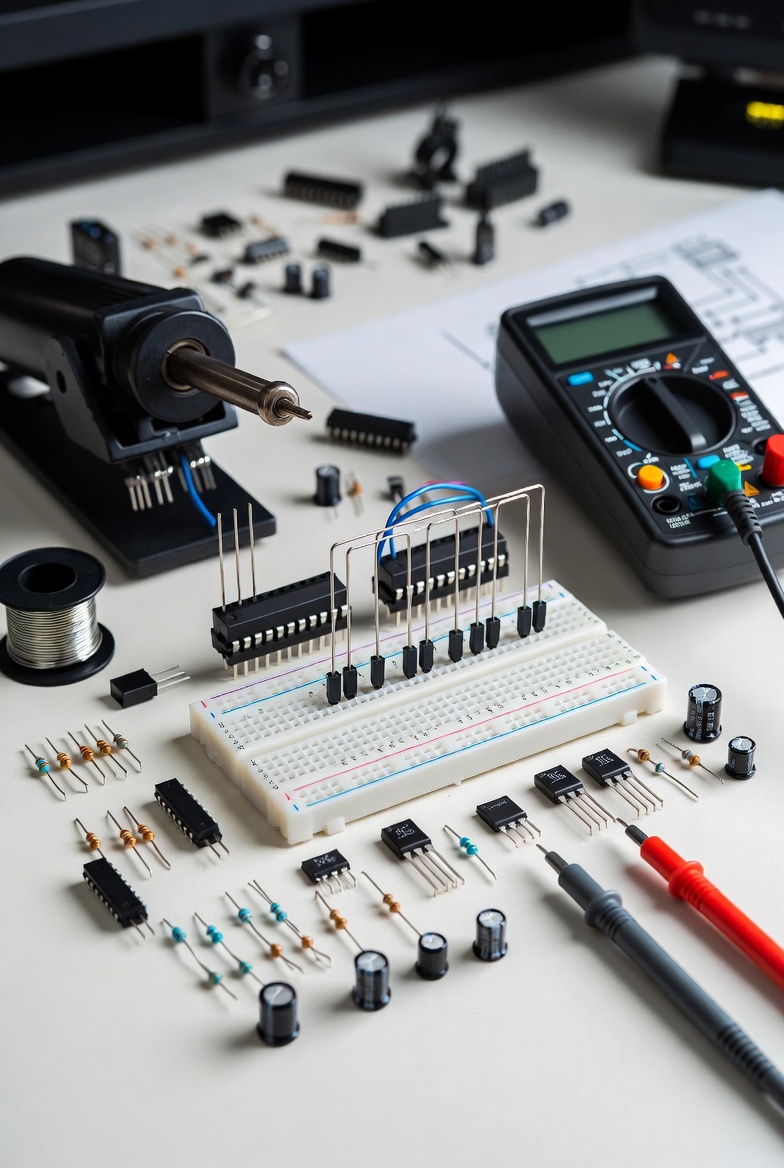
An electronics prototyping kit is a collection of electronic components and tools designed to allow users—such as hobbyists, students, engineers, or makers—to quickly build, test, and experiment with electronic circuits without needing to solder permanently. These kits enable rapid prototyping (creating early versions of circuits or devices) to prove concepts, learn electronics principles, or develop projects like sensors, lights, or simple robots.
Key Features and Purpose
Solderless Design — Most use breadboards (reusable boards with holes for inserting components and wires) and jumper wires for easy connections that can be rearranged.
Educational and Experimental — Great for beginners to learn basics (e.g., how LEDs, resistors, and sensors work) or for advanced users to test ideas before building permanent PCBs (printed circuit boards).
Proof-of-Concept Focus — Often used for early-stage hardware development, like integrating microcontrollers (e.g., Arduino or Raspberry Pi) to validate functionality.
Common Components Included
Typical kits contain:
Breadboard(s)
Jumper wires
Resistors (various values)
LEDs (light-emitting diodes)
Capacitors
Transistors
Sensors (e.g., light, temperature, motion)
Buttons/switches
Sometimes a microcontroller board (like Arduino Uno), power supply, or motors
Popular Examples
Arduino Starter Kit → Includes an Arduino Uno board, breadboard, components, and project guides for building things like alarms or simple robots.
Raspberry Pi Kits → For more advanced computing-based prototypes.
Basic Breadboard Kits → Focus on passive components (resistors, LEDs) without a microcontroller.
Snap Circuits → Kid-friendly versions with snap-together parts (no breadboard needed).