
Can you injection mold around magnets
Yes, you can injection mold plastic around magnets using a process called insert molding or overmolding. Manufacturers commonly embed magnets (including strong neodymium ones) securely in plastic parts for applications like sensors, motors, connectors, and consumer products.
Key Considerations
1.High temperatures during injection molding (often 200–300°C) can demagnetize magnets if already charged. Manufacturers insert unmagnetized blanks and magnetize the assembly afterward using specialized equipment.
2.For pre-magnetized magnets, they use high-temperature-resistant grades (e.g., SmCo or certain NdFeB with high coercivity) or control the process carefully to minimize heat exposure.
3.The magnet secures in the mold with pins, grooves, steps, or pinch features to prevent movement during high-pressure injection.
4.Benefits include strong mechanical bonding (no glue needed), protection from corrosion/damage, complex shapes, and cost efficiency in high-volume production.
Distinction from Bonded Magnets
This differs from making injection-molded bonded magnets, where magnetic powder mixes directly with plastic to form the magnet itself.
Here are some examples of overmolded/insert-molded magnets in plastic parts:
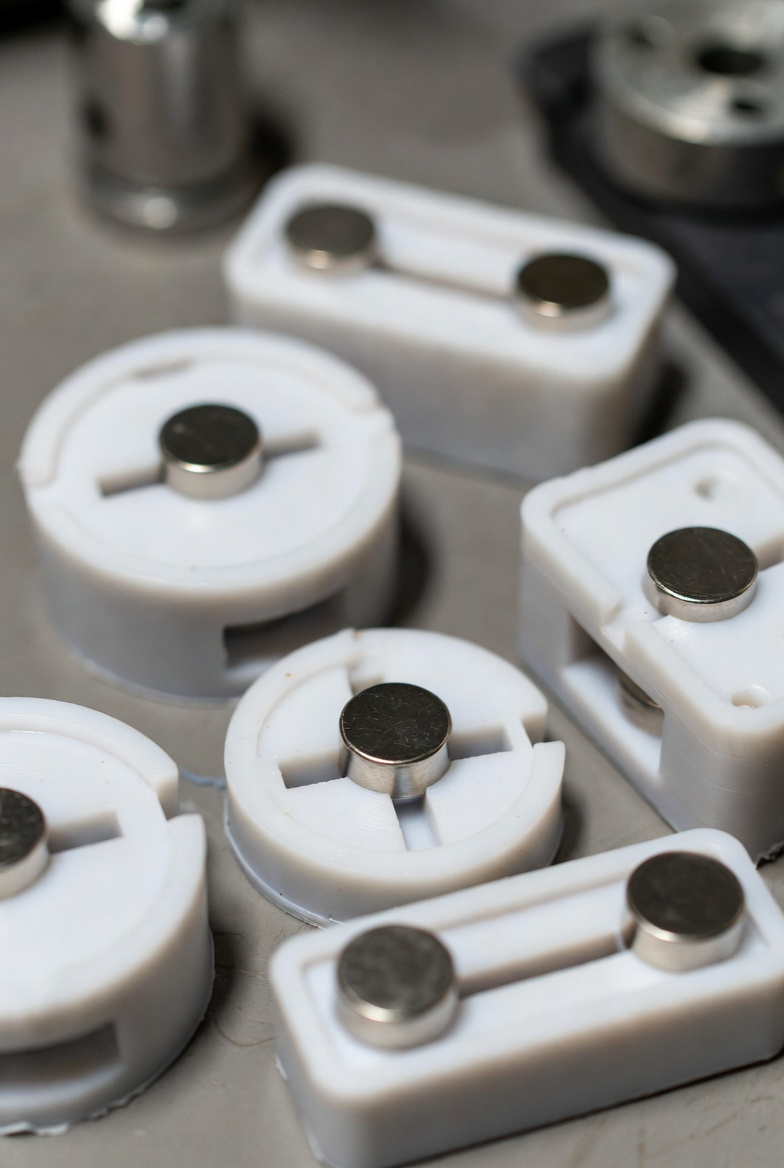
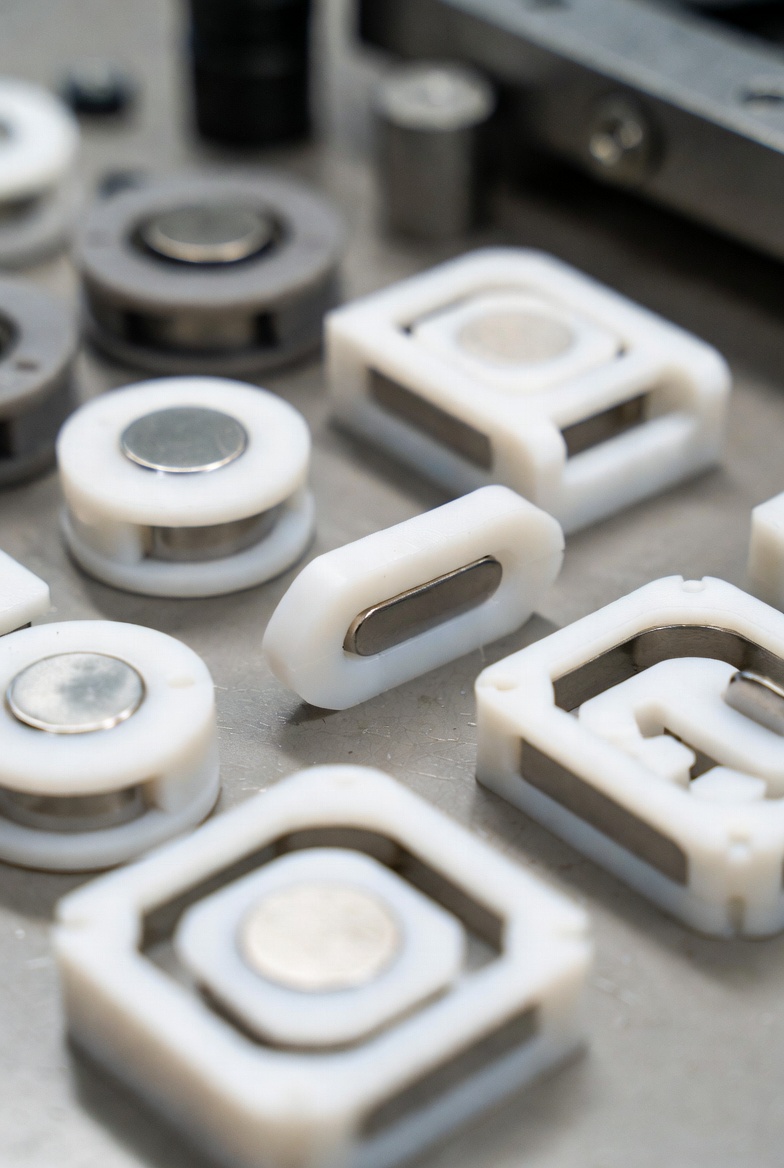
It's a standard technique in manufacturing, though it requires expertise in mold design and material selection to avoid issues like demagnetization or poor bonding.