
Recycling die-cast metal is highly worthwhile, both for its environmental impact and its market value. Most die-cast items—such as model cars, engine components, and household fixtures—are made from non-ferrous alloys (metals that do not contain significant amounts of iron), primarily aluminum and zinc.
Unlike plastics, these metals can be recycled indefinitely without losing their structural integrity.
1. Financial Value
Die-cast metals are generally more valuable than standard "light iron" or sheet steel.
Aluminum Die-Cast: Often fetches between $0.40 – $0.68 per pound depending on purity and local market rates.
Zinc Die-Cast: Typically priced similarly to aluminum, often around $0.60 – $0.70 per pound.
2. Environmental Impact
The "energy math" for die-cast recycling is one of the strongest arguments for its worth:
Energy Savings: Recycling aluminum uses 95% less energy than extracting it frombauxite ore.
Emission Reduction: Producing new die-cast parts from recycled material reduces C'O2emissions by approximately 92-95%.
Resource Conservation: Every ton of recycled aluminum saves 4 tons of bauxite andsignificantly reduces the need for destructive open-pit mining. ?
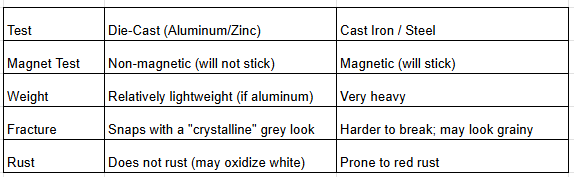
Is Your Item "Die-Cast"?
To determine if your scrap is worthwhile, you can use these quick tests:
How to Get the Best Price
Remove Contaminants: Strip away plastic wheels, rubber tires, or steel axles from die-cast toys. Scrap yards pay "Clean" prices (highest) vs. "Dirty" prices (lower) based on how much work they have to do to sort it.
Separate by Metal: If you have a large amount, keep your zinc separate from your aluminum.