
The short answer is yes, die cast aluminum is generally very safe, but the context matters—whether you are cooking with it, handling it, or manufacturing it.
Here is the breakdown of safety across different categories:
1. Cooking and Food Safety
This is where most people have concerns. Modern die cast aluminum cookware is widely considered safe for daily use.
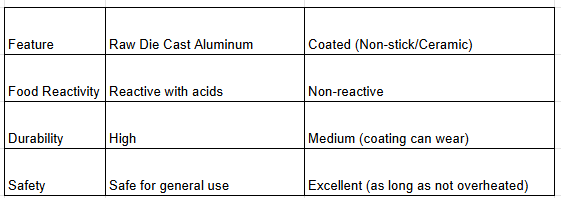
1.The Coating Factor: Most die cast pans (like "granite" or non-stick pans) are coated with PTFE (Teflon) or ceramic. As long as the coating is intact, the aluminum doesn't even touch your food.
2.Leaching: If you use uncoated aluminum with highly acidic foods (like tomato sauce or lemon juice), a tiny amount of aluminum can leach into the food. However, the World Health Organization (WHO) states that the amount is well below safety limits for most people.
3.The "Alzheimer’s" Myth: You may have heard a link between aluminum and Alzheimer’s. Current scientific consensus from organizations like the Alzheimer’s Association is that there is no solid evidence proving that aluminum exposure causes the disease.
2. Structural and Product Safety
In terms of its physical properties, die cast aluminum is exceptionally safe for consumer products.
1.Non-Toxic: It is a stable metal that doesn't "off-gas" or release harmful chemicals at room temperature.
2.Fire Safety: Aluminum is non-combustible and non-sparking, which is why it's used in hazardous environments and engine components.
3.Durability: Because it is cast under high pressure, it is less likely to have internal air bubbles (porosity) than sand-cast metal, making it very structurally sound and unlikely to snap or fail under stress.
3. Workplace and Environmental Safety
If you are involved in the manufacturing side, there are specific risks to manage:Aluminum Dust: Fine aluminum powder or dust (from grinding or sanding) is flammable and can be respiratory irritants.Molten Metal Risks: During the casting process, the high temperatures ($600^\circ\text{C}$+) and high pressures require strict industrial safety protocols to prevent burns or equipment failure.
Comparison: Raw vs. Coated Aluminum
Pro Tip: If you have an old die cast aluminum pan that is deeply scratched or pitted, it’s usually best to replace it—not necessarily because of "poisoning," but because it becomes a haven for bacteria and loses its performance