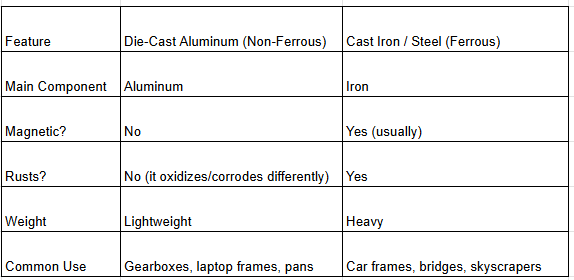
Yes, die-cast aluminum is non-ferrous.
In the world of metallurgy, metals are split into two main camps: ferrous (contains iron) and non-ferrous (does not contain iron). Since aluminum is the primary ingredient in die-cast aluminum, it falls firmly into the non-ferrous category.
Here is a breakdown of why that matters and how it affects the material's properties:
1.Iron Content
Non-Ferrous: These metals have almost no iron. While aluminum die-casting alloys (likeA380 or A360) often contain a tiny amount of iron (usually 1% to 2%) to prevent themolten metal from sticking to the steel mold, it is considered an impurity or a minoradditive.
Ferrous: These are defined by iron being the primary component (e.g., steel, cast iron).
2. Magnetism
The Test: If you hold a magnet up to die-cast aluminum, it will not stick.
Why: Non-ferrous metals are generally non-magnetic. This makes die-cast aluminum idealfor electronic housings where magnetic interference could be an issue.
3.Corrosion Resistance
The Advantage: Ferrous metals are prone to "rust" (iron oxide) when exposed tomoisture.
The Aluminum Way: Because it is non-ferrous, die-cast aluminum does not rust. Instead,it forms a thin, natural layer of aluminum oxide on its surface that protects it from furthercorrosion.
4. Weight and Conductivity
Weight: Die-cast aluminum is about one-third the weight of ferrous metals like steel.
Conductivity: It is a far better conductor of heat and electricity than most ferrous metals,which is why you see it used in heat sinks for computers and LED lights.
Comparison Table