The injection molding process—a specialty of firms like Shenzhen Alu Rapid Prototype Precision Co., Ltd—is the backbone of mass-producing plastic parts with high precision. While we are known for "rapid" services, the core physics of the process remains the same whether they are creating a prototype or a full production run.
Think of it like a high-tech, industrial version of a hot glue gun combined with a waffle iron.
The Step-by-Step Process
The process is cyclic, typically taking anywhere from a few seconds to two minutes per part.
Clamping: Before anything else, the two halves of the metal mold (the "A" side and "B" side) are pressed together under immense pressure by a hydraulic powered unit.
Feeding & Melting: Raw plastic pellets are fed from a hopper into a heated barrel. Inside, a reciprocating screw rotates, using friction and heaters to melt the plastic into a molten state.
Injection: The screw acts like a plunger, slamming forward to inject the molten plastic into the mold cavity at high pressure.
Cooling: Once the cavity is filled, the plastic must solidify. Cooling lines (channels with circulating water) inside the mold pull heat away from the part.
Ejection: The mold opens, and ejector pins push the finished part out. The cycle then resets immediately.
What Makes "Rapid" Injection Molding Different?
Companies like Shenzhen Alu Rapid specialize in a specific niche of this industry. Here is how we differ from traditional high-volume molding:
Mold Material: Traditional molds use hardened steel (lasting millions of cycles). Rapid prototyping often uses aluminum or pre-hardened steel. Aluminum dissipates heat faster, which speeds up the cooling phase.
Bridge Tooling: They often provide "bridge" solutions—creating a mold that is cheaper and faster to produce than a full-scale production tool, allowing you to get parts in 2–4 weeks rather than 3 months.
Precision CNC: Since they are a precision company, they use high-speed CNC machining to cut the mold cavities directly from digital CAD files, bypassing some of the slower manual polishing steps.
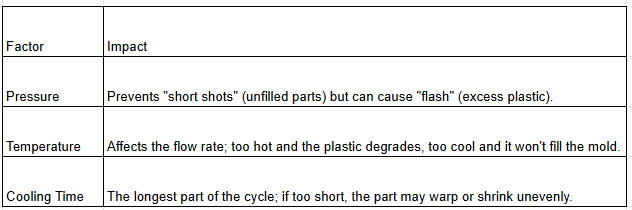
Key Variables for Success