
Designing a prototype—especially when leveraging a high-precision partner like Shenzhen Alu Rapid Prototype (AluPrototype)—requires transitioning from a conceptual "looks-like" model to a "works-like" functional part that meets industrial standards.
Given their specialization in CNC machining and rapid tooling, the design process should focus on manufacturability and material integrity.
1. Define Your Prototype Tier
Before sending files to a vendor, categorize your prototype to determine the manufacturing method:
Alpha Prototype (Functional): Focuses on the internal mechanism. Usually CNC machined from engineering plastics like Delrin (POM) or PC.
Beta Prototype (Pre-production): Focuses on final materials and aesthetics. This often involves Rapid Tooling or high-end vacuum casting to simulate injection-molded parts.
Medical/Industrial Grade: Requires specific certifications and high-performance materials like PEEK or Titanium.
2. Technical Design Optimization (DFM)
When working with a precision shop in Shenzhen, your CAD files must be optimized for their machines (typically 3-, 4-, or 5-axis CNC):
1.Standardize Radii: Avoid perfectly sharp internal corners. Designing with a minimuminternal corner radius (e.g., 1.5mm or 3mm) allows standard CNC end mills to machine the part efficiently.
2.Wall Thickness: For plastics like PEEK or PTFE, maintain a minimum wall thickness of0.8mm to 1.0mm to prevent warping or "chatter" during high-speed machining.Threaded Holes: Specify metric threads (M2, M3, etc.) clearly in your 2D drawings.
3.Foraluminum prototypes, consider stainless steel inserts (Helicoils) if the part will bedisassembled frequently.
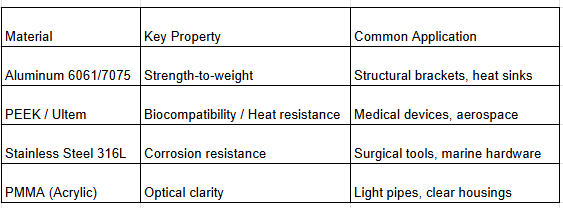
3. Material Selection for Precision
AluPrototype is known for handling "difficult" materials. Match your design to these common industrial choices:
4. Communication with the Factory
To get an accurate quote and a high-quality part from a Shenzhen-based precision firm,provide a complete RFQ (Request for Quote) package:
1. 3D Files: STEP or IGES formats are the industry standard.
2. 2D Technical Drawings: PDF format. Crucial for indicating tolerances (e.g., +0.05mm),surface finish (e.g., Ra 1.6), and post-processing like anodizing or bead blasting.
3. BOM (Bill of Materials): If the prototype is an assembly, list every component and itsrespective material.