Creating an injection mold (also called an injection moulding tool) is a precision engineering process that typically costs from several thousand to hundreds of thousands of dollars, depending on complexity, size, number of cavities, and material (aluminum vs steel). Most companies outsource this to professional mold makers (like in Shenzhen/China, which is the global center for mold manufacturing).Here is the realistic industry-standard process step by step (2025–2026 practices):
1.Finalize the plastic part design + DFM analysis
Complete 3D model of the part (usually in STEP, IGES, or native CAD format)
Perform DFM (Design for Manufacturability) check → look for:
Adequate draft angles (typically 0.5–2° per side)
No impossible undercuts (or plan sliders/lifters)
Uniform wall thickness (ideal 1.0–3.5 mm)
Proper rib/gusset design
Good locations for gates, ejectors, and parting line
Many mold makers provide this DFM report for free or low cost.
2.Mold concept & quotation stage
Decide:
Single-cavity / multi-cavity / family mold
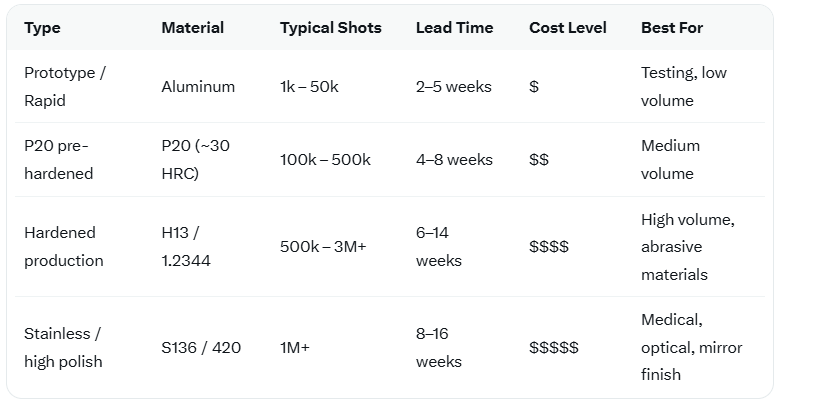
Prototype mold (aluminum, P20 steel, fast & cheaper) vs production
mold (H13, 1.2344, S136 stainless, very expensive)
Hot runner vs cold runner
Lifetime expectation (shots): 100 k → 5+ million
Mold maker creates preliminary 2D/3D mold layout + quotation (usually 3–7 days)
3.Detailed 3D mold design
Usually done in professional software: SolidWorks + Moldflow (most common)
UG NX (Siemens), Creo, CATIA
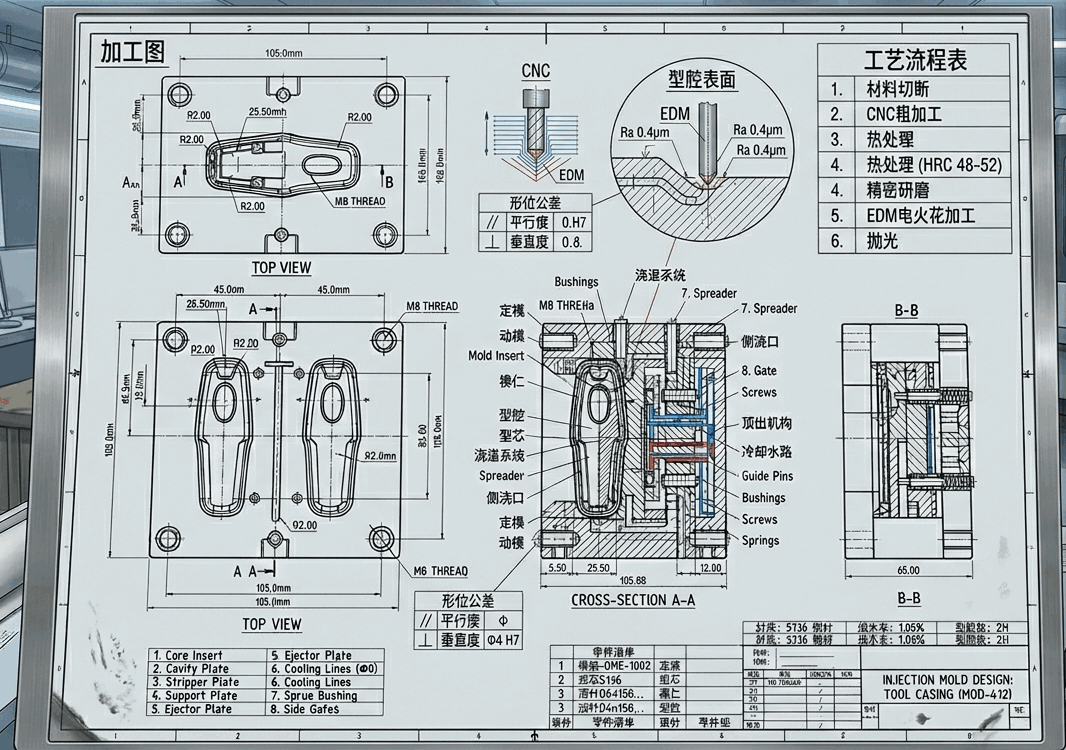
Main elements designed:
Cavity & core inserts
Parting line / parting surface
Gate type & location (edge, sub, hot-tip, valve-gate, etc.)
Runner & gating system
Cooling channels (very important – bad cooling = bad parts)
Ejector pins / sleeves / blades
Slides, lifters, collapsible cores (for undercuts)
Guide pins / bushings / interlocks
Support pillars / plates
Venting slots / vacuum venting
Moldflow simulation (filling, warpage, cooling, sink mark prediction)
4.Material selection & ordering
Mold base (standard or custom – Hasco, DME, LKM equivalents very common in China)
Insert steel grade
Standard components (ejector pins, sprue bushing, cooling nipples, etc.)
5.Rough machining
CNC milling of mold base & roughing of core/cavity blocks (large cutters, high material removal rate)
Usually leaves 0.3–1 mm stock
6.Semi-finishing & heat treatment
More accurate CNC milling
Heat treatment (hardening & tempering) – most common for production molds
Stress relieving
7.CNC high-speed finishing + EDM (spark erosion)
High-precision CNC for most surfaces (Ra 0.4–0.8 μm possible)
EDM for deep ribs, sharp corners, textured areas, small details that cannot be milled
Sometimes wire-cut EDM for inserts or through-holes
8.Bench work (hand fitting & polishing)
Hand lapping, stoning, diamond polishing
Surface finish from #400 to mirror (#8000–12000) or texturing (VDI, Mold-Tech, laser texture)
Fitting of moving parts (slides, lifters) – very skilled work
9.Assembly & fitting
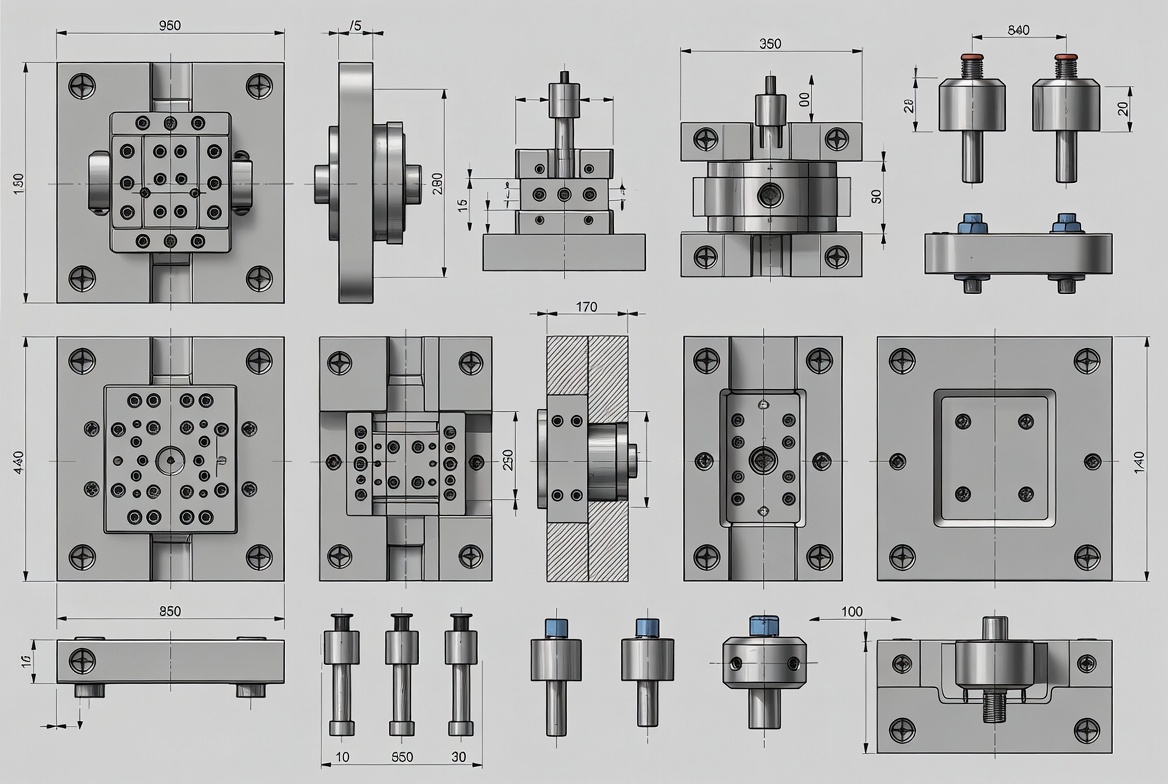
Assemble all plates, inserts, cooling circuit, ejector system
Install limit switches, sensors (if required)
Check mold opening/closing, ejector stroke, slide movement
10.Mold trial (T0, T1, T2 …)
Install mold in injection machine
First shots → usually many defects
Adjust: injection pressure, speed, temperatures, cooling time, holding pressure
Modify mold (steel safe changes first – add material instead of removing)
Repeat trials until parts meet spec (dimensional, cosmetic, strength)
11.Final acceptance & delivery
Last trial (FAI – First Article Inspection)
Mold polishing / texture touch-up if needed
Anti-rust treatment & packaging
Delivery + spare parts (ejector pins, springs, etc.)
Quick Comparison Table – Mold Types