Getting rid of scratches on an injection mold requires a systematic approach, moving from aggressive removal to fine polishing. The method depends entirely on the depth of the scratch.
1. Assess the Damage
Before you start, clean the area with a solvent (like acetone or a specialized mold cleaner) to see the true depth of the scratch.
1.Superficial: Visible but cannot be felt with a fingernail (< 0.02 mm).
2.Medium: Obvious "catch" with a fingernail (0.02-0.05 mm).
3.Deep: Deep gouges or chips (> 0.05 mm).
2. The Repair Process
A. For Light to Medium Scratches (Mechanical Polishing)
This is the most common method, using a "step-down" grit process. Never skip a grit level, or you will simply be polishing the bottom of a scratch you didn't remove.
1. Stoning: Use a mold maker's stone (oil stone) starting at 320 or 400 grit. Use keroseneas a lubricant.
2. Cross-Hatching: Polish in one direction until the scratch is gone. Then, switch to the nextgrit (e.g., 600) and polish at a 90° angle to the previous marks. This helps you see whenthe previous grit's scratches are fully removed.
3. Sandpaper: Move to wet/dry sandpaper (600 - 800 - 1200 grit). Wrap the paperaround a wooden or plastic "stick" to maintain a flat surface; using just your finger cancreate "dishing" (uneven valleys).
4. Diamond Paste: For a mirror finish (SPI A-level), use diamond compound on a felt bob orcloth. Start with 9-micron paste and move down to 1-micron for a high-gloss finish.
B. For Deep Scratches (Welding & Machining)
If the scratch is too deep, "polishing it out" will change the dimensions of your part (creating a "flat spot" or "hump" on the plastic).
1.Laser Welding: The gold standard. It adds a tiny amount of matching tool steel to the scratch with minimal heat, preventing the mold from warping.
2.Micro-TIG Welding: A cheaper alternative, but carries a higher risk of "heat-affected zones" that can make the steel harder and more brittle in that spot.
3.Re-Machining: After welding, the excess metal is ground down or CNC-machined back to the original geometry before the polishing steps above are repeated.
3. Critical Tips for Success
1.Polish in the Direction of Draw: Whenever possible, finish your final polishing strokes in the direction the part will eject. This reduces friction and prevents parts from "sticking" in the mold.
2.Avoid "Orange Peel": This happens when you polish too long in one spot or with too much pressure/heat. It makes the steel look like the skin of an orange. If this happens, you usually have to drop back down to a coarser grit and start over.
3.Cleanliness is Godliness: One tiny grain of 400-grit dust on your 1200-grit sandpaper will ruin your finish instantly. Wipe the mold and change your gloves between every grit change.
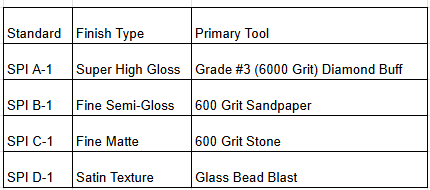
Summary of SPI Finish Standards
If you are aiming for a specific industry standard, follow this guide: