
How to calculate shrinkage in injection molding?
In professional injection molding, shrinkage calculation is not a static math problem but a dynamic process involving material science and processing parameters. To ensure your molds at Shenzhen Haina Precision Mould produce parts within the required tolerances, you must move beyond nominal shrinkage values.
1. The Core Mathematical Relationship
Shrinkage (S) is defined as the difference between the mold cavity dimension (Lm) and thefinal part dimension (Lp) at room temperature, relative to the mold dimension.
The Fundamental Formula
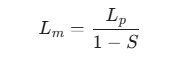
When designing your mold, you need to calculate the necessary mold dimension (Lm) basedon the desired part dimension (Lp) and the expected shrinkage rate (S).
Rearranging the formula for design purposes:
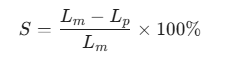
Note: For low-shrinkage materials (where S is very small), Lm ≈ Lp(1 + S) is often used as a simplified approximation.
2. Why Material Data Sheets (MDS) are Insufficient
The shrinkage values found in polymer datasheets are usually measured under specific ISO/ASTM conditions (standardized slab testing). In reality, shrinkage is anisotropic and highly variable. You must adjust your calculation based on these three variables:
Factor | Impact on Shrinkage |
Crystallinity | Crystalline plastics (e.g., PA66, PEEK) exhibit significantly higher shrinkage than amorphous plastics (e.g., ABS, PC) because polymer chains organize into dense crystalline structures during cooling. |
Wall Thickness | Thicker sections cool slower and remain under pressure longer, often resulting in different shrinkage rates compared to thinner sections of the same part. |
Flow Direction | Shrinkage is almost always higher perpendicular to the polymer flow direction than parallel to it due to molecular orientation. |
3. Engineering Strategy for Haina Precision Mould
Given your work with high-performance plastics like PA66 + 30% glass fiber and precision sensor shields, rely on this workflow rather than simple hand calculations:
A. The "Conservative Steel" Approach
Always design your mold with the potential to remove more steel. It is significantly cheaper to machine a cavity larger (to shrink a part) than it is to weld or shim a cavity to make a part larger.
Cut for the Lower Bound: If the shrinkage range for your material is 0.5%-0.8%,calculate for 0.5% (the smaller mold dimension). If the part comes out too large during T1trials, you can easily machine the mold to reach the 0.8% mark.
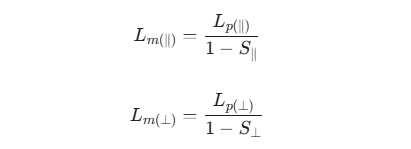
B. The Anisotropy Adjustment
For materials like your glass-filled PA66, you must apply different shrinkage factors for the flow
C. CAE Integration
For complex projects like the 1.2-meter aluminum-replacement sensor shields, manual calculations are insufficient. We recommend running Moldflow or Sigmasoft analysis to predict volumetric shrinkage. This simulation considers packing pressure, cooling channels, and gate locations, which are more influential on final shrinkage than the material property alone.