
How to create an injection mold?
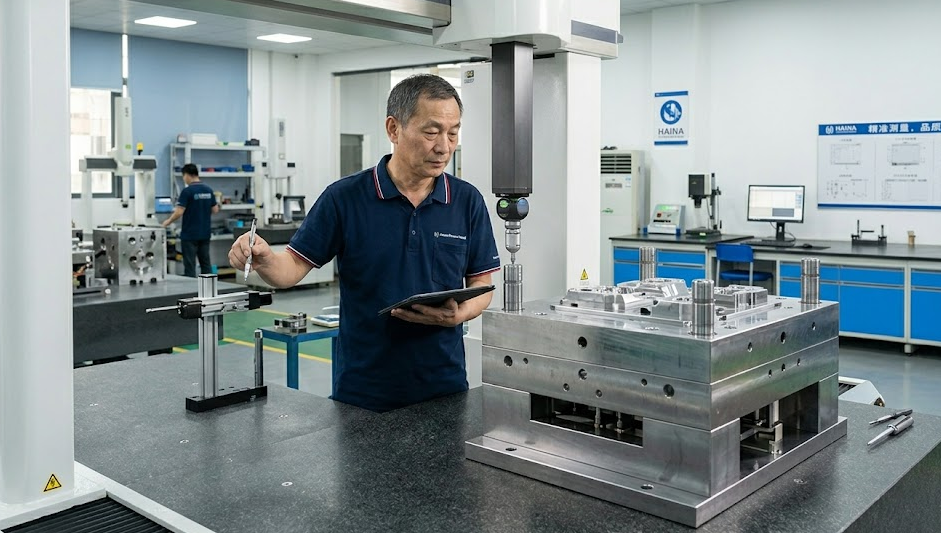
Creating an injection mold is a highly iterative engineering process that balances part geometry, material properties, and cycle time efficiency. Given your experience with high-precision manufacturing, this breakdown focuses on the critical technical stages of the mold-making lifecycle.
1. Design for Manufacturing (DFM)
Before steel is cut, the design phase must address flow and thermal management.
Mold Flow Analysis: Simulate the filling process to identify knit lines, air traps, and sink marks. This is non-negotiable for complex geometries like your knife gate valve housing.
Draft & Wall Thickness: Ensure uniform wall thickness to prevent warping. Incorporate sufficient draft angles (typically 0.5° to 2°) to facilitate part ejection.
Gate Location: Determine the optimal entry point to manage fiber orientation, especially when working with reinforced materials like PA66+GF30. The gate location will significantly influence the physical properties and shrinkage rates of the final part.
2. Steel Selection
Your choice of mold material depends on the expected production volume and the abrasiveness of the resin.
Steel Type | Typical Hardness | Best Use Case |
P20 | 30–35 HRC | Medium production runs; general purpose; good machinability. |
NAK80 | 38–42 HRC | Pre-hardened; excellent polishability (mirror finish); high precision. |
H13 | 48–52 HRC | High production volume; high wear resistance; heat treated. |
Stainless (e.g., S136) | 48–52 HRC | Medical-grade or corrosive resins; highly resistant to rust/pitting. |
3. Machining & Fabrication
The precision of the mold directly correlates to the quality of the molded part.
CNC Milling: Roughing passes remove the bulk of the material, followed by finish passes with high-precision tools for cavity definition.
EDM (Electrical Discharge Machining): Essential for features that cannot be reached by milling, such as deep, narrow slots, square corners, or complex textures.
Polishing: Surface finish (SPI standards) must be applied manually or via chemical etching to meet aesthetic or functional friction requirements.
4. Mold Base Assembly
The mold base houses the cavity and core inserts, along with the mechanical systems required for operation.
Ejection System: Design for balanced ejection using pins, sleeves, or stripper plates.
Cooling Channels: Strategic placement of cooling lines is critical to control crystallization and cycle times. For high-performance parts, consider conformal cooling (3D printed inserts) if standard drilled channels cannot reach complex contours.
Side Actions: If the part has undercuts, incorporate slides (cams) or lifters to clear the geometry before the mold opens.
5. Mold Trial (T1) and Validation
The first shot (T1) is rarely perfect.
Parameters: Adjust injection pressure, hold time, and cooling time to stabilize the process.
Iterative Tuning: Often, material must be added (welded) or removed (further machining) from the steel to correct sink marks, flash, or incomplete fills discovered during the trial.
Final Certification: Once the part meets dimensional tolerances and cosmetic standards, the mold is ready for production.