
From Idea to Interaction: The Ultimate Guide to Chatbot Prototyping
The goal of a chatbot prototype is not to build the perfect AI immediately—it is to fail fast, learn quickly, and validate your conversation design before a single line of production code is written.
1. Define the Problem and Persona
Before opening any design tool, you must establish the "why" and the "who."
Use Case: What specific problem are you solving? (e.g., Automating factory floor inventory checks vs. Customer service FAQs).
The Persona: Define the tone. Should the bot be formal and concise for industrial settings, or friendly and conversational for consumer apps?
2. Design the Conversation Flow (The "Wireframe")
In software, the conversation flow is the equivalent of a CAD drawing. You need to map out the "happy path" (the user gets exactly what they want) and the "error path" (the bot doesn't understand the user).
Tools: Use flow-charting tools like Lucidchart, Miro, or Figma (FigJam) to visualize the branching logic.
The "Script": Write out the dialogue. Keep it brief. If the user asks "X," the bot responds "Y." Map out the nodes carefully.
3. Choose Your Prototyping Strategy
There are three main ways to prototype a chatbot, depending on your technical comfort level:
A. The "Wizard of Oz" Method (High Fidelity, Low Code)
This is the fastest way to test. You (the human) sit behind the scenes and type the responses as if you are the AI.
Why it works: It allows you to test the value of the conversation without needing any AI infrastructure. You see what users ask and how they react to the bot's "answers" in real-time.
B. Low-Code Prototyping Tools
Use platforms designed specifically for conversational design.
Popular Tools: Voiceflow, Botmock, or Typeform/Landbot.
Why it works: These tools let you drag and drop logic blocks to create an interactive simulation that looks like a real chatbot interface. You can share these links with stakeholders to get immediate feedback.
C. Developer Prototyping (Local Frameworks)
If you are comfortable with Python and local LLM frameworks (like the local agents you have explored previously), you can build a "Minimum Viable Chatbot" (MVC).
Why it works: It validates that your local data source is compatible with the AI model. It ensures the latency, accuracy, and technical feasibility meet your standards before scaling.
4. The Validation Loop
Once your prototype is functional, you must subject it to the "Stress Test."
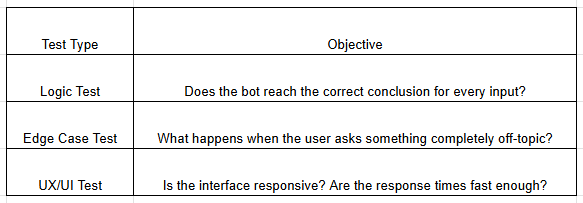
Why Chatbot Prototyping Mirrors Hardware Prototyping
At AluPrototype, we understand that whether you are manufacturing a metal housing or designing a software interface, the prototyping phase follows the same core principles:
Validation of DFM (Design for Manufacturability): In software, this means validating "Design for Machine-Learning"—ensuring your data is clean and your logic is sound.
Risk Mitigation: Catching a logical error in a prototype costs nothing. Catching a logical error in a deployed, customer-facing bot can be disastrous.
Stakeholder Buy-in: Just as a physical model helps clients visualize a product, a functional chatbot prototype helps your team "see" the AI in action, which is essential for securing approval.
Prototyping Best Practices
Keep it Modular: Build your conversation logic in small, testable chunks. Don't try to build the whole library at once.
Embrace Friction: Watch where users get stuck. If a user constantly asks for clarification at a specific step, your "interface" (the chatbot's prompt) is the issue, not the user.
Document Everything: Treat your chatbot flowcharts like engineering schematics. Keep them updated as you iterate.
Ready to integrate AI into your workflow?
At Shenzhen Alu Rapid Prototype Precision Co., Ltd, we specialize in bridging the gap between digital concepts and physical execution. While we are masters of CNC machining and industrial prototyping, we are equally passionate about the technology that streamlines modern manufacturing.
Are you currently developing a chatbot for an internal industrial tool or a customer-facing application? We’d love to hear about the specific challenges you are facing in your AI integration.