
Most metals shrink when they are cast due to a phenomenon called thermal contraction combined with the phase change from liquid to solid.
Here's the step-by-step explanation of why this happens:
1.Liquid Expansion (while molten)
When metal is heated to its melting point and poured into a mold, it is in a liquid state. Liquids have higher volume than solids for the same mass because atoms/molecules are farther apart.
2.Solidification Shrinkage (≈ 3–7% (volume)
As the molten metal cools and begins to solidify, the atoms arrange themselves into a more densely packed crystalline structure. This phase change from liquid → solid causes a significant decrease in volume.
3.Further Thermal Contraction (solid cooling)
After solidification, as the solid metal continues cooling from the solidification temperature down to room temperature, it undergoes normal thermal contraction (typically 1–2% linear). This is smaller than the solidification shrinkage but still adds to the total.
Total Typical Shrinkage (linear) When Casting Metals:
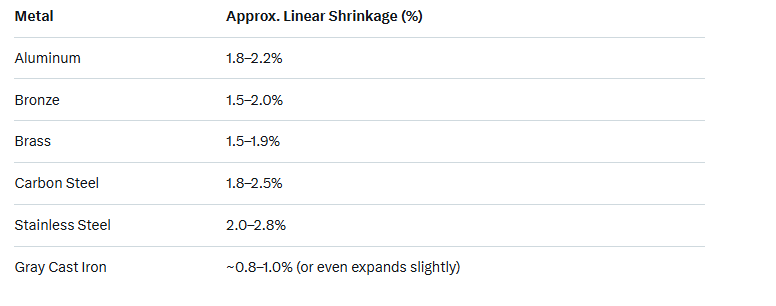
Important Exception: Gray Cast Iron
Gray cast iron often shrinks very little or even expands slightly during solidification because graphite flakes precipitate and grow, increasing volume and counteracting the normal contraction. This is why cast iron was traditionally favored for complex castings (less shrinkage defects).
Why Patternmakers Make Patterns Oversized
Because of this predictable shrinkage, foundry patternmakers make wooden or metal patterns larger than the desired final part by the known “shrinkage allowance” percentages (e.g., an aluminum pattern will be made ~2% larger in every dimension).
In summary:
Most metals shrink when cast primarily because the atoms pack much more tightly when changing from a disordered liquid to an ordered crystalline solid, plus additional cooling contraction—resulting in the casting being smaller than the mold cavity that contained the original liquid metal.