
Overview of the Two Processes
Key Advantages & Disadvantages
3D Printing
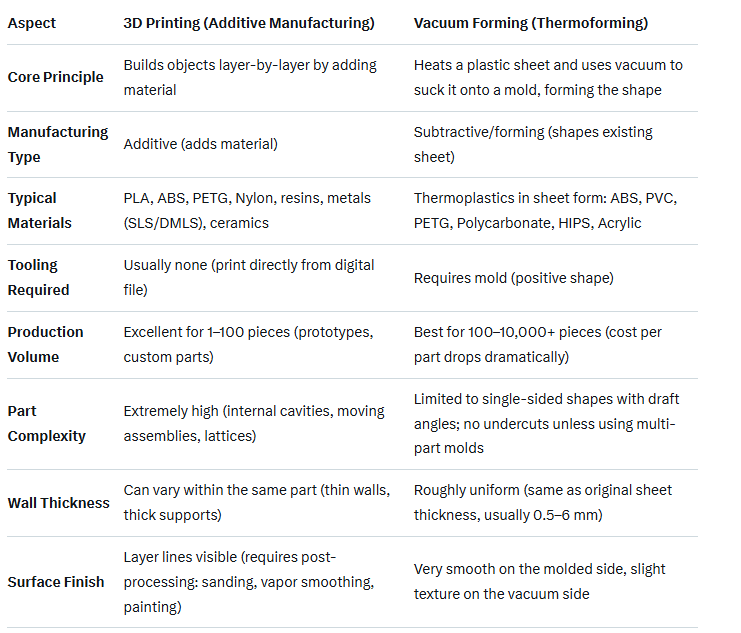
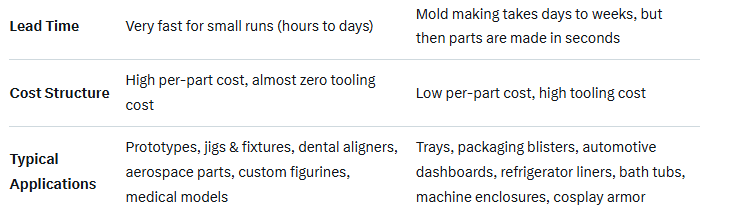
Advantages: No tooling, unlimited geometric freedom, easy design changes, functional end-use parts possible (especially with engineering resins/metals).
Disadvantages: Slow for large volumes, expensive per part when scaled, visible layer lines, limited material selection compared to injection molding.
Vacuum Forming
Advantages: Extremely cheap at medium-high volumes, excellent surface finish, very large parts possible (car bodies, boat hulls), fast cycle times (10–60 seconds per part).
Disadvantages: Requires a mold for every new shape, limited to relatively thin-walled, single-surface parts, significant material waste (trimming the excess sheet), draft angles required.
In short: 3D printing is “digital” and tool-less, perfect for low-volume complexity; vacuum forming is a classic high-volume plastic forming process that still requires physical molds but is unbeatable on cost and speed once the mold exists.