
How much impact has the rapid development of artificial intelligence had on humanity?
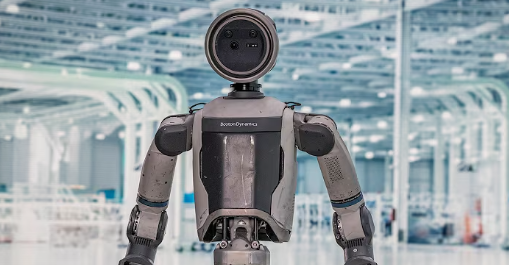
The rapid development of artificial intelligence since roughly 2012 (the AlexNet moment) and especially since 2022 (ChatGPT moment) has already had a very large impact on humanity—larger and faster than almost any prior technological shift except possibly the atomic bomb and the internet itself. Below is a balanced assessment as of late 2025.
Positive Impacts (already measurable)
1.Productivity & Economic Growth
Studies (McKinsey Global Institute 2023–2025 updates, MIT 2024, NBER papers) estimate AI has added 0.5–2 percentage points to annual global GDP growth since 2022, with some sectors (software engineering, customer support, legal discovery, radiology, drug discovery) seeing 20–50% productivity gains.
Programming output on GitHub roughly doubled in speed for users of GitHub Copilot and similar tools; junior engineers now routinely produce senior-level code volume.
2.Scientific Acceleration
AlphaFold (2020–2022) solved the 50-year-old protein-folding problem; by 2025 essentially all major pharma companies design drugs with AI, cutting early-stage timelines from 4–6 years to months.
AI co-authored or accelerated thousands of published papers in math (DeepMind’s AlphaProof & AlphaGeometry), materials science, and fusion research.
3.Medicine & Health
AI radiology systems now outperform average human radiologists on many tasks (chest X-ray, mammography, retinal scans). In low-resource settings, AI on smartphones diagnoses diseases with specialist-level accuracy.
Life expectancy gains are still small globally, but in specific domains (e.g., skin cancer detection) error rates have dropped 30–50%.
4.Education & Access to Knowledge
Hundreds of millions of people now use LLM tutors (ChatGPT, Claude, Gemini, Grok) daily. Students in poor countries can get near-Ivy-League-level explanations for free. Duolingo, Khan Academy, and others report dramatically higher completion rates when AI tutors are used.
5.Creative Industries
AI tools (Midjourney, Stable Diffusion, Suno, Udio) have democratized art, music, and video creation. Hundreds of millions of people who never could draw or compose now produce high-quality work. Hollywood and the music industry are being forced to renegotiate contracts because of AI-generated likenesses and voices.
Negative or Disruptive Impacts (already measurable)
1.Job Displacement & Inequality
White-collar knowledge work is being automated faster than expected. Customer-support agents, paralegals, junior copywriters, translators, and basic coders have seen 20–80% workforce reductions in some companies.
The “AI exposure” of jobs correlates strongly with college-educated, higher-wage roles—reversing the pattern of 20th-century automation that mostly hit blue-collar workers.
2.Misinformation & Manipulation
Deepfakes and AI-generated text have made it much harder to trust video, audio, and written content. Election interference attempts using AI surged in 2024–2025 (documented in India, Indonesia, UK, US).
Social media engagement algorithms + LLMs have supercharged hyper-partisan content and conspiracy theories.
3.Concentration of Power
Almost all frontier AI capability is controlled by ~5–7 American companies + a few national labs (USA, China). This is the fastest concentration of technological power in history.
4.Mental Health & Cultural Effects
Young people (Gen Alpha & late Gen Z) are growing up with AI companions, AI-generated content, and AI-influenced aesthetics. Long-term psychological effects are unknown but early studies show increased anxiety about “authenticity” and creativity.
5.Geopolitical & Security Risks
AI has lowered the barrier to cyber offense, bioweapon design, and autonomous weapons. State and non-state actors now use AI for intelligence analysis, drone swarms, and influence operations. The US-China AI arms race is the dominant feature of 2020s geopolitics.
Bottom Line as of December 2025
The impact is already “very large” (comparable to the early internet 1995–2005 or smartphones 2008–2018), but we are still in the very beginning. Most economists and technologists expect the majority of the economic and social transformation to occur between 2025 and 2035.